
The Costa Blanca's most beautiful coves (and how to reach them without losing your cool)
Granadella, Moraig, Portitxol, la Fustera: our pick of the Costa Blanca's turquoise coves, with summer access and parking rules and tips for really enjoying them.
Also available in Español · Nederlands · Français

There are the big sandy beaches — practical, lively, parasols in neat rows. And then there are the calas: pebble or sand coves tucked beneath the cliffs, where the water turns shades of turquoise you thought only existed on postcards. The northern Costa Blanca, between Dénia and Altea, is full of them. Here are our favourites — and, above all, the instructions for reaching them in summer, because a paradise cove loses its charm fast when you’ve spent an hour circling for a parking space.
Granadella (Xàbia) — the star
Tucked between two pine-covered cliffs, Granadella cove often makes lists of Spain’s most beautiful beaches. White pebbles, crystal-clear water, perfect snorkelling: it has it all. The downside: it’s very popular.
In summer, access is regulated: from 2 June to 6 September (plus some weekends in late September), the 130-space car park is paid (€9 per day per vehicle, 9am to 7pm) and a barrier closes access when it’s full. A tourist train runs from the La Guardia Park development (€6 adults, €4 under-12s, return).
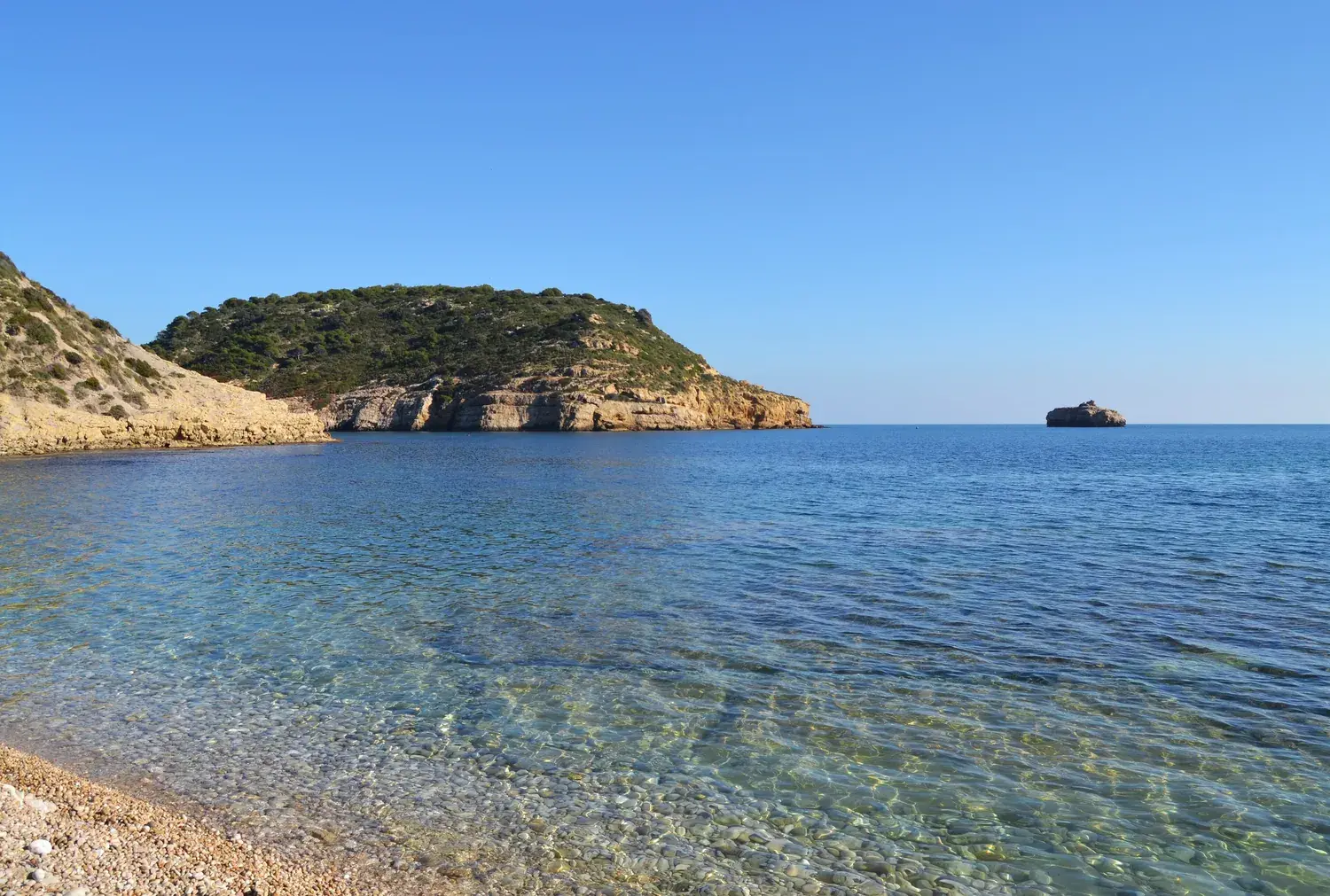
Portitxol / la Barraca (Xàbia) — the island opposite
Facing Portitxol island, this pebble cove lined with old white-and-blue fishermen’s huts is one of the most photogenic in the area. Same summer rules as Granadella: a regulated car park with just 59 spaces on Calle Barraca. No direct public transport.
Cala del Moraig (Poble Nou de Benitatxell) — the spectacular one
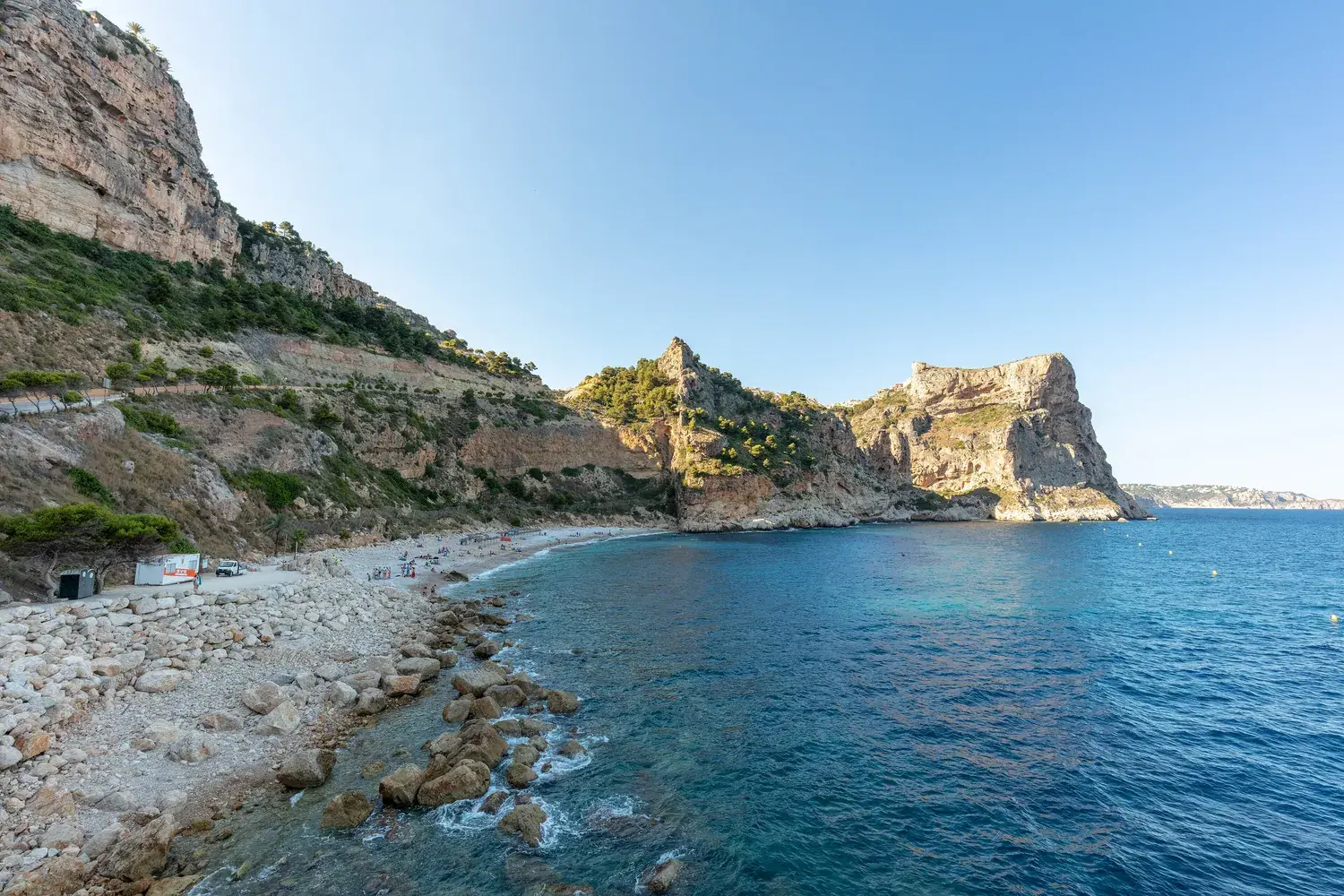
At the foot of high cliffs, Cala del Moraig is a pebble cove famous for the Cova dels Arcs, a sea cave carved with natural arches. Snorkellers will find superb underwater scenery. The access path zigzags down: wear good shoes for the climb back.
Cala de la Fustera (Benissa) — the family-friendly one
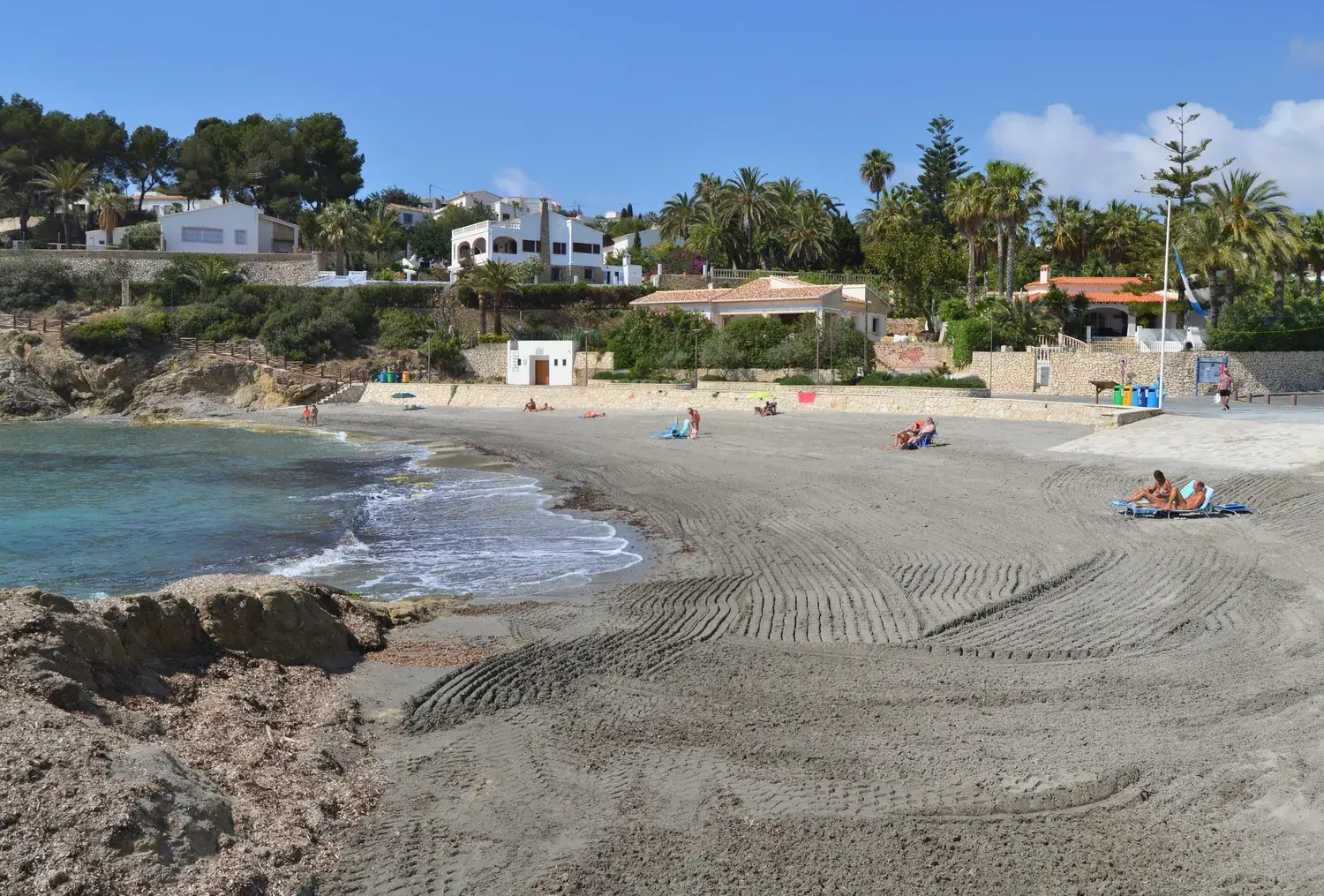
A change of mood in Benissa: Cala de la Fustera is a small, gently sloping beach of fine sand, surrounded by villas and pines. It’s one of the easiest coves with children, with beach facilities in season.
Our golden rules for coves
- Arrive early, really early. In July and August, before 9.30am is often the only way to park.
- Water shoes: most coves are pebbly and the rocks are slippery.
- Travel light: there are usually steps or a path to go down… and back up.
- Mask and snorkel: rocky seabeds are far richer than those of sandy beaches.
- Respect the place: take your rubbish home and don’t park just anywhere (the fines are very real).
Nearby
The coves pair well with Calpe and the Peñón de Ifach or the lanes of Altea. For a freshwater swim, head to the Fonts de l’Algar. And if you like walking along the coast, see our easy walks.


