
Tabarca: the island where time stands still, 30 minutes off the coast
The only inhabited island in the Valencia region: how to get there by boat from Santa Pola or Alicante, the story of the walled village, Spain’s first marine reserve and tips for your day.
Also available in Español · Nederlands · Français

There is a precise moment during the crossing when you realise you were right to come: the boat slows down, the water turns transparent and the walled village of Tabarca appears on the sea like a scale model. At 1,850 metres long and no more than 450 metres wide, the island has barely sixty year-round residents. It is the only inhabited island in the Valencia region and one of the loveliest excursions on the Costa Blanca.
A tale of kings and pirates
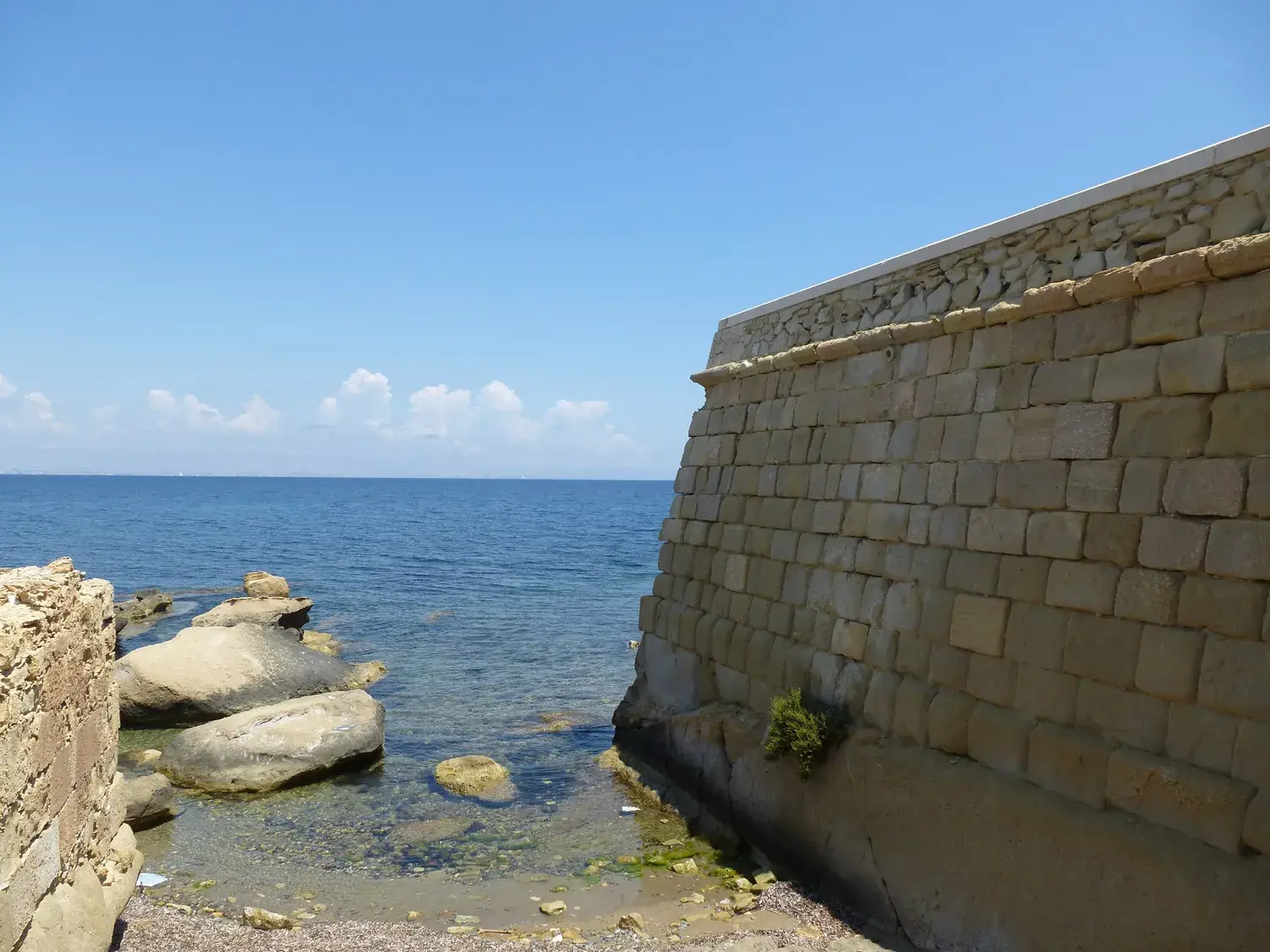
Tabarca’s history reads like a novel. In 1768, King Charles III ransomed more than 300 Genoese held captive on Tabarka, an island off Tunisia. To settle them — and to protect the coast from Barbary pirates at the same time — a fully walled village, named Nueva Tabarca, was built on this then-deserted island and completed around 1770.
You still enter the village through its monumental gates, walk along its ramparts facing the sea and discover the baroque church of San Pedro y San Pablo. Further away, the San José tower and the 19th-century lighthouse keep watch over the wild side of the island.
Beneath the surface, the real treasure
In 1986, Tabarca’s waters became Spain’s first marine reserve. The result: exceptionally clear water, meadows of posidonia seagrass and marine life that snorkellers can get close to. Some boats even offer underwater viewing as they approach the island.
A day on Tabarca
In the morning, wander through the village, past low houses, washing hanging from windows and cats snoozing in the sun. You can see it all on foot in an hour.


At lunchtime, settle into one of the harbour restaurants to try caldero tabarquino, the local dish: rice cooked in fish stock, often served in two stages.
In the afternoon, enjoy the little beaches and rocky coves, grab your mask and snorkel, or walk to the lighthouse across the uninhabited part of the island.
Practical information
Our tips
Take an early boat to enjoy the island before the midday rush, and book your return for late afternoon.
Check the forecast: in strong winds, crossings can be cancelled.
Bring water and a hat: outside the village, there is very little shade.
Mask and snorkel, of course. In a marine reserve, it would be a shame to go without.
Around Tabarca
The nearest departure port, Santa Pola, is worth a detour too: its salt flats with flamingos and, in the evening, Pola Park for the kids. For a city break, Alicante and its castle are half an hour away, and Elche’s palm grove is only a little further.


